Backstory
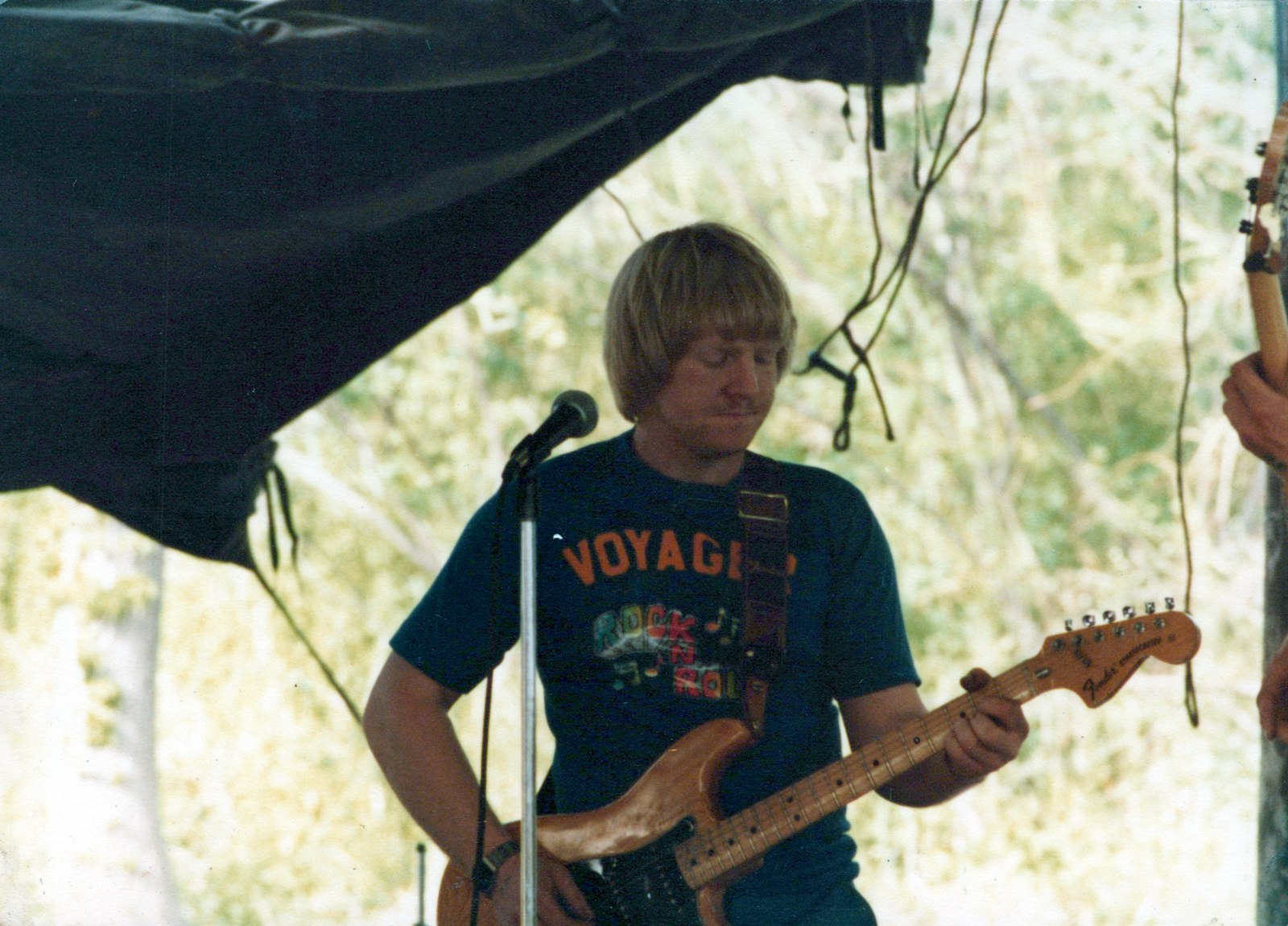
My father, Ted, was a musician and a mechanic. I was born in 1985; he died in 1987, so I don't really have many memories of him.
When my mom passed in 2021, I came across a set of reel-to-reel recordings that had been saved — various tapes recorded from 1978 to 1980. I don't have any real memories of my dad's music, which makes these reels an important link to my own history.
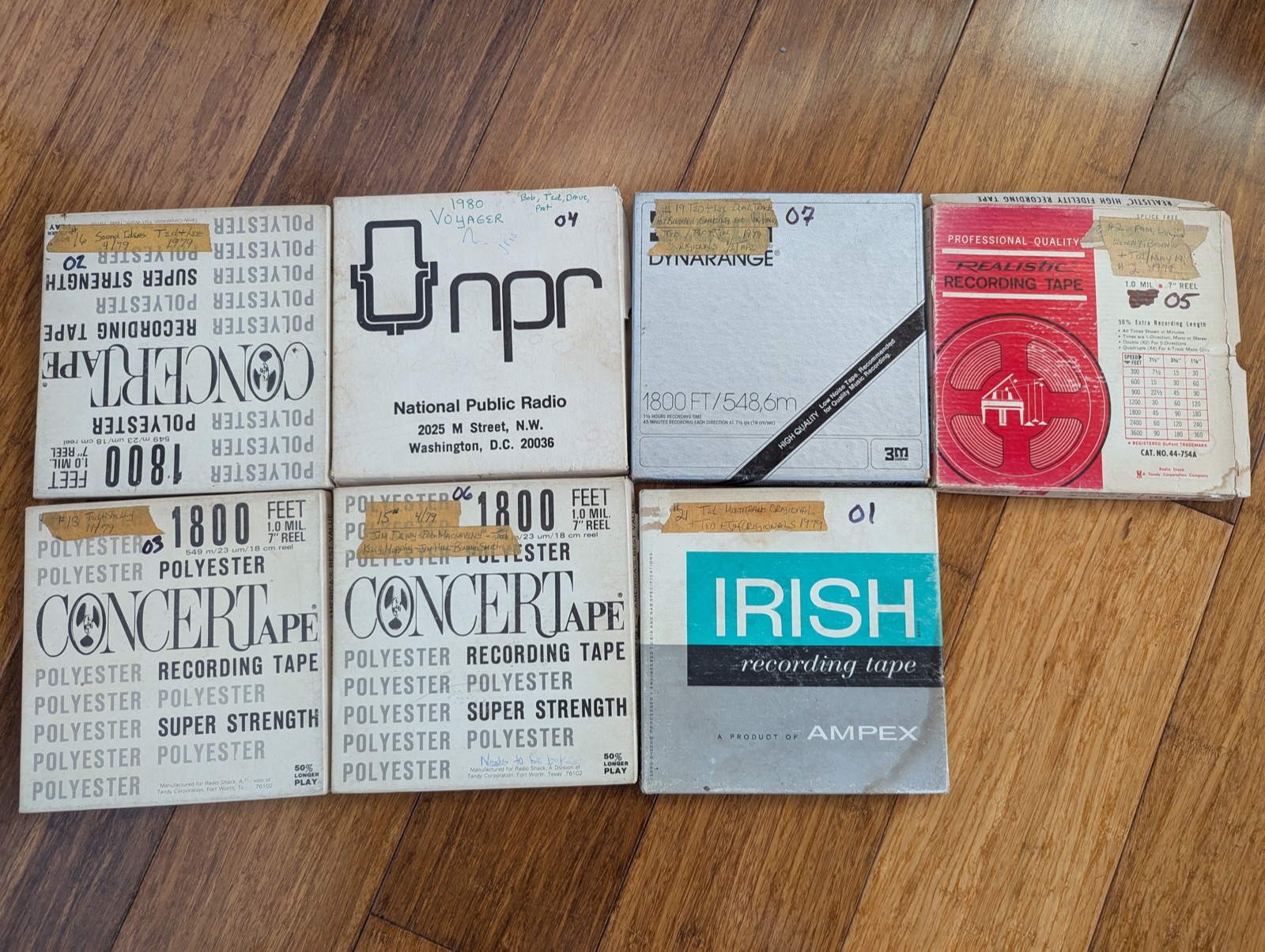
While I was in the US for my mom's funeral, I sent the tapes off to a company to digitize them. They did two reels and rejected the others because they had some mold on the side. So I brought the reels back with me to New Zealand, planning to get a player and digitize them myself — but doing that in NZ turned out to be too cost-prohibitive, and the box went into storage.
The warm-up: an Akai X-150D
After I moved over to Australia, opening that box again sent me looking at players once more. I found one locally — an Akai X-150D. I did the re-capping, replaced some commonly noisy transistors, and picked up an analog-to-digital converter to plug into my sound bar — it only has optical input, so the little converter box turns the deck's line out into an optical signal it can take.
To my great joy — the tapes still played.
But the X-150D is a home machine. It doesn't have the frequency range or the calibration facilities I'd need to get the best possible transfer. Along the way I also learned about sticky shed syndrome and how a tape transport actually works — none of which I grew up with. My era was cassettes; 8-tracks and reel-to-reel were before my time.
The Mini Pro
After the X-150D, I knew two things: I wanted a studio machine, and I wanted it broken. I was going to do the electronics bench work anyway — that's the labor of love — so a working deck at a working-deck price made no sense. When an Otari MX-5050 came up listed as broken — dead transport, sold as faulty — and close enough to drive to, that was the whole decision. The “faulty” listing is also why a studio machine came in under $1,000 AUD.
It wasn't broken. The MX-5050's transport control runs through its accessory socket, which needs a shorting dummy plug fitted whenever no remote is connected. The plug was missing. That was the whole fault — the machine was fine. The full story is in the restoration log.
Here's the part I didn't see coming: I had no idea what I'd bought. The listing said MX-5050, and I assumed the internet would tell me the rest. Only when I started trying to fix it did I learn my machine was the original — the silver-faced first generation, the Mini Pro. Rare, and barely documented, because almost everything written about the MX-5050 describes the later B and BII machines. As a brand-new owner I hit dead ends everywhere.
The name turned out to be the first thing worth getting right. “Mini Pro” isn't a collectors' nickname: it's Otari's own, in the American trade press from September 1974 and across their own full-page advertising that December — and on some first-generation decks it is silk-screened onto the faceplate. That single fact took a fortnight of digging through period magazines to establish, and it is a fair sample of how much about this machine had simply never been written down. So this site became the resource I couldn't find: everything I learn about the Mini Pro, every period document I track down — now in the Library — and the history pieced back together from the sources, published for the good of the internet, so the next owner doesn't struggle the way I did.
The longer arc
I've spent my whole career in IT, but electrical and electronics work has always been the love running underneath it. Vintage computers were my first crossover into hands-on restoration; this tape project is the bridge from there into vintage audio. The Mini Pro is where the hobby gets serious: transport mechanics, analog electronics, calibration — documented here as I go; the road map lives on Ambitions.
And at the end of it, my father's tapes get the playback they deserve.