Period press · Electronics Australia, June 1976 · scan pages 23
Otari MX-5050 Professional Series Two-Speed Tape Recorder
Otari Electric Company Ltd of Japan manufacture a range of conservatively rated tape recorders for use in broadcast and recording studios. Here we review one of the Otari MX-5050 series, which is available in a variety of speed and track configurations.
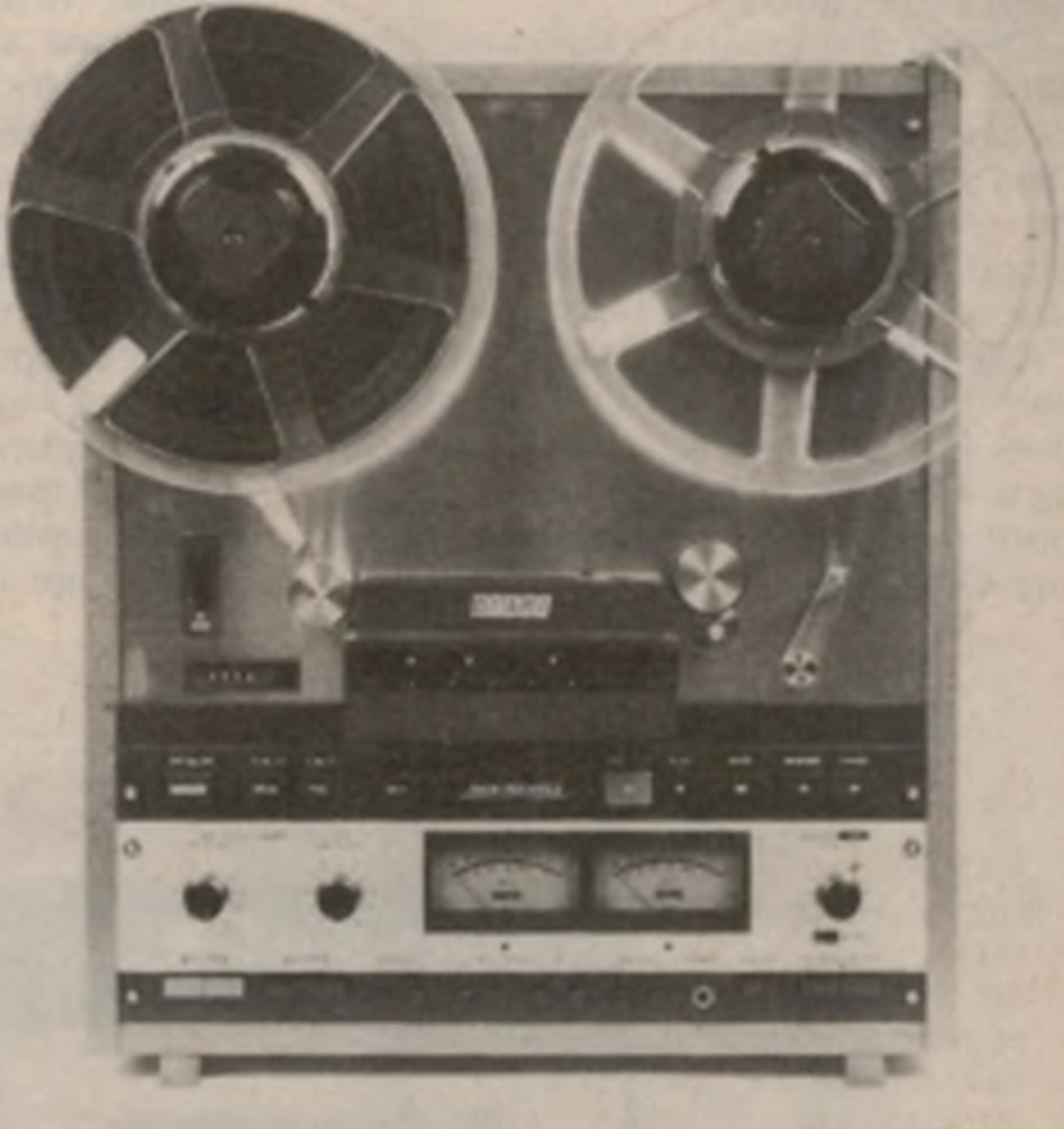 ⤢ zoomA solenoid-controlled three-motor transport mechanism and a full range of preset adjustments for equalisation, signal and bias levels are features of the Otari MX-5050 series of recorders, which are intended for use in broadcast and recording studios.
As far as tape recorders are concerned there is generally a great deal of difference between those intended for the domestic high fidelity market and those intended for more demanding use in broadcast and recording studios. The latter machine is likely to be more ruggedly built, incorporate more preset adjustments for signal level, equalisation and bias (although not necessarily having more knobs and buttons) and be more conservatively rated.
The MX-5050 series recorders are two-speed machines using ¼in tape and are available in eight different model configurations as determined by the tape speeds and the recording and reproduction format, ie, the head arrangement. Tape speeds available are 15 ips and 7½ ips or 7½ and 3¾ ips.
Recording and reproduction formats are ½-track or ¼-track stereo, full track, ½-track and ¼-track monaural and ¼-track four-channel. Naturally all these possibilities are not available together in the one machine. For example, the machine we had for review was designated MX-5050-2SHT, which indicates that it had tape speeds of 15 and 7½ ips and a head assembly with four separate heads; Erase, ½-track Record, ½-track Playback and ¼-track Playback. A head changeover switch allows selection of the playback head.
This combination of heads allows the 2SHT model to record in ½-track monaural or stereo mode with simultaneous playback for monitoring purposes. The unit can also play ¼-track monaural or stereo tapes made on other machines.
An interesting feature of the four channel model is that it has staggered ¼-track 2-channel erase heads in order to be able to erase the four tracks simultaneously when recording in four-channel mode.
Each model is available in the standard walnut finish cabinet as pictured, or a portable case which actually weighs more. In addition, there is a rack mounting kit available. Anyway you look at it, the machines are heavy, ranging from 24kg in the standard cabinet to 34kg for the heaviest portable model. Both cabinets may be used horizontally or vertically, with best cooling obtained in the vertical position.
All components of the tape transport assembly are mounted on a very thick aluminium plate which is attached to the polished dress plate to provide extreme rigidity. The two spooling motors are 6-pole induction types while a hysteresis-synchronous motor drives the large capstan flywheel via a flat belt. The only other belt in the transport mechanism drives the reel revolution counter.
The transport accommodates reels from 12.7cm to 26.7cm (10½in) diameter in NAB or EIA hub configuration.
All functions of the transport mechanism are solenoid controlled with the exception of the adjustable cueing lever. This makes for fast, easy and foolproof operation and permits the use of an optional remote control unit.
Some of the other functions which are not often found on domestic machines include: tension selector for large or small reels, edit control which permits tape spilling and rocking, adjustable cueing control for audible monitoring during fast forward and rewind, built-in test and cue-tone oscillator at 1kHz, adjustable bias and equalisation controls, standard reference level output calibration control and XLR connectors for line inputs and outputs.
Inside, the machine is surprisingly uncluttered and simple in concept. Most of the circuitry is accommodated on two large PC boards. One criticism we can make concerns ease of removal of these boards—it would be no easy task since there are so many soldered interconnections.
Accessories provided with the MX-5050 comprise two NAB locking hubs, one Otari 27.5cm take-up reel, one reel adjusting shim, one fuse and a comprehensive manual in a looseleaf binder. The manual gives full details of specifications, installation, operation and maintenance and includes complete circuit diagrams.
We have not subjected the Otari to the comprehensive testing necessary to fully assess its performance, but we can state from our brief experience of the machine that it is well built and worthy of consideration for application in broadcast or recording studio.
Further information on price, performance and availability of Otari tape recorders can be obtained from the Australian distributors, Klarion Enterprises Pty Ltd, 63 Kingsway, South Melbourne, Victoria, 3205. (L.D.S.)