Otari MX-5050

The Mini Pro

An MX-5050-2SHT, first generation, bought listed as broken. About the 2S →

Backstory

My father, Ted, was a musician and a mechanic. I was born in 1985; he died in 1987, so I don't really have many memories of him.
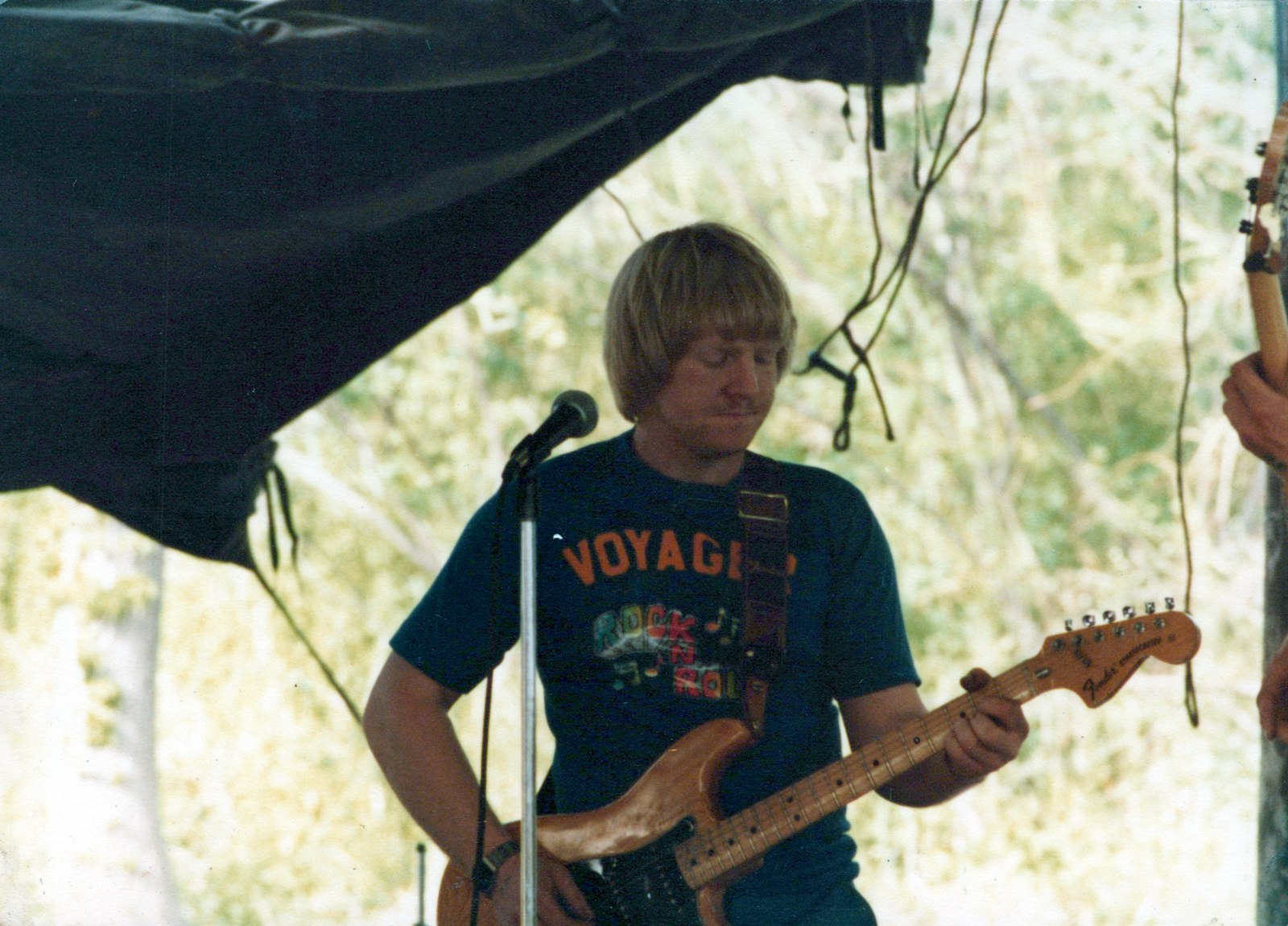
Ted playing a Fender guitar at an outdoor show under a canopy, 1980
Ted on stage, 1980.

When my mom passed in 2021, I came across a set of reel-to-reel recordings that had been saved — various tapes recorded from 1978 to 1980. I don't have any real memories of my dad's music, which makes these reels an important link to my own history.
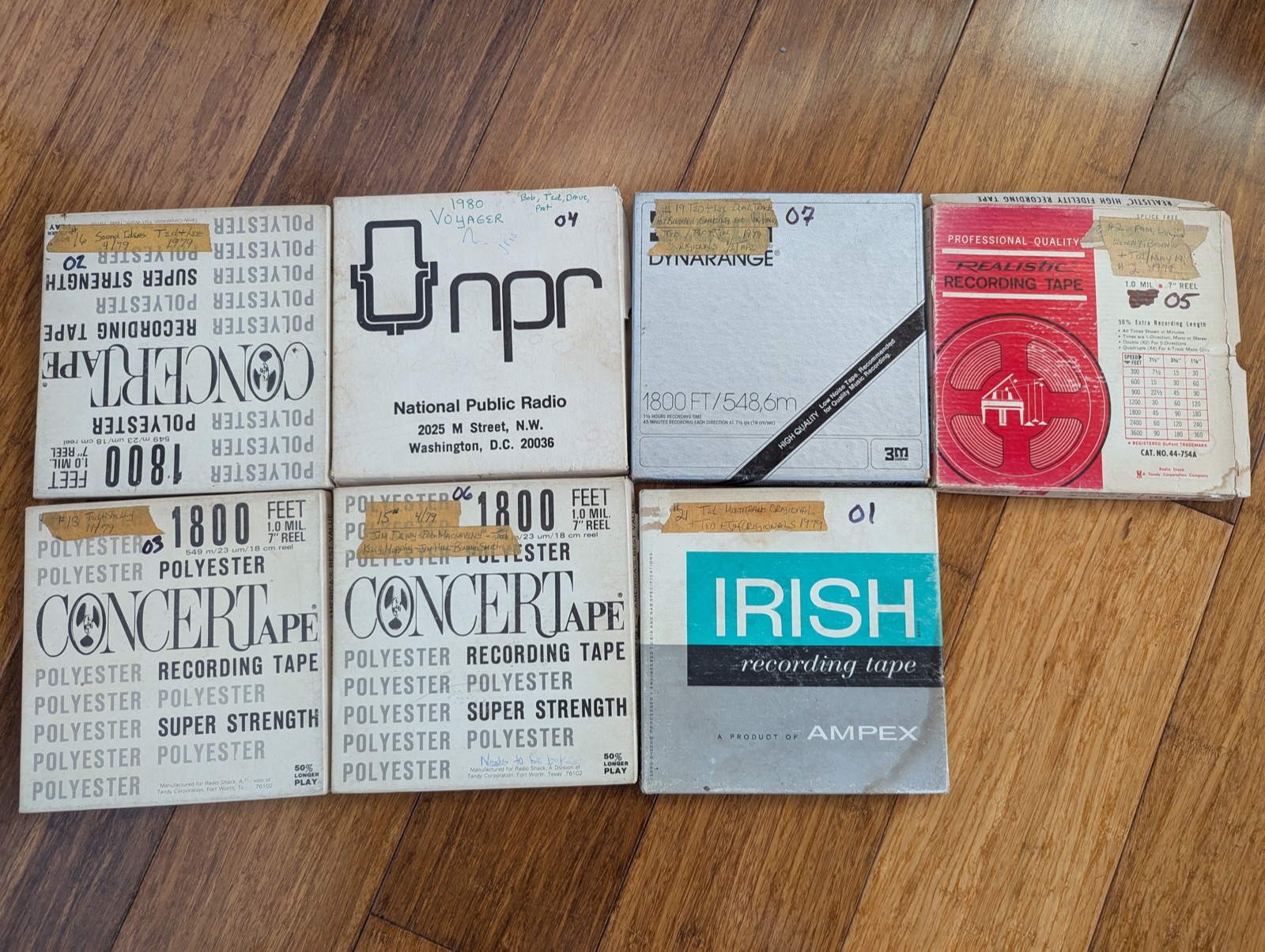
Seven reel-to-reel tape boxes recorded between 1978 and 1980, hand-labelled with Ted's name
Seven of the reels, hand-labelled 1978–1980 — “Ted & Jim originals”, “Bob, Ted, Dave, Pat”.

While I was in the US for my mom's funeral, I sent the tapes off to a company to digitize them. They did two reels and rejected the others because they had some mold on the side. So I brought the reels back with me to New Zealand, planning to get a player and digitize them myself — but doing that in NZ turned out to be too cost-prohibitive, and the box went into storage.

The warm-up: an Akai X-150D

After I moved over to Australia, opening that box again sent me looking at players once more. I found one locally — an Akai X-150D. I did the re-capping, replaced some commonly noisy transistors, and picked up an analog-to-digital converter to plug into my sound bar — it only has optical input, so the little converter box turns the deck's line out into an optical signal it can take.

To my great joy — the tapes still played.

But the X-150D is a home machine. It doesn't have the frequency range or the calibration facilities I'd need to get the best possible transfer. Along the way I also learned about sticky shed syndrome and how a tape transport actually works — none of which I grew up with. My era was cassettes; 8-tracks and reel-to-reel were before my time.

The Mini Pro

After the X-150D, I knew two things: I wanted a studio machine, and I wanted it broken. I was going to do the electronics bench work anyway — that's the labor of love — so a working deck at a working-deck price made no sense. When an Otari MX-5050 came up listed as broken — dead transport, sold as faulty — and close enough to drive to, that was the whole decision. The “faulty” listing is also why a studio machine came in under $1,000 AUD.

It wasn't broken. The MX-5050's transport control runs through its accessory socket, which needs a shorting dummy plug fitted whenever no remote is connected. The plug was missing. That was the whole fault — the machine was fine. The full story is in the restoration log.

Here's the part I didn't see coming: I had no idea what I'd bought. The listing said MX-5050, and I assumed the internet would tell me the rest. Only when I started trying to fix it did I learn my machine was the original — the silver-faced first generation, the Mini Pro. Rare, and barely documented, because almost everything written about the MX-5050 describes the later B and BII machines. As a brand-new owner I hit dead ends everywhere.

The name turned out to be the first thing worth getting right. “Mini Pro” isn't a collectors' nickname: it's Otari's own, in the American trade press from September 1974 and across their own full-page advertising that December — and on some first-generation decks it is silk-screened onto the faceplate. That single fact took a fortnight of digging through period magazines to establish, and it is a fair sample of how much about this machine had simply never been written down. So this site became the resource I couldn't find: everything I learn about the Mini Pro, every period document I track down — now in the Library — and the history pieced back together from the sources, published for the good of the internet, so the next owner doesn't struggle the way I did.

Two copies, and a helping hand

The project changed me more than I expected. A forum post about MRL calibration tapes led to a meetup with kelossus from Tapeheads, and hearing vinyl and reel-to-reel played through tube amps and horn speakers genuinely amazed me — the detail, the presence. So the plan grew: every one of Ted's tapes will get two copies. A digital transfer, so the recordings can be shared and kept safe; and an analog copy onto fresh modern tape, preserving as much detail as possible and letting me hear them played back the way they would have sounded at the time.

This site also brought me some luck. Through it I met a fellow tapehead in Sydney, u/fruhfy on Reddit, who owns an analog-to-digital converter with far more precision than I could justify buying — let alone know how to use — and who is building custom, very precise amps and preamps to make the digital copy as accurate as it can be. His generous offer to help with the transfer took real pressure off a project I've been working on since 2021, and freed me to widen this site from my one machine to the whole MX-5050 line.

The longer arc

I've spent my whole career in IT, but electrical and electronics work has always been the love running underneath it. Vintage computers were my first crossover into hands-on restoration; this tape project is the bridge from there into vintage audio. The Mini Pro is where the hobby gets serious: transport mechanics, analog electronics, calibration — documented here as I go; the road map lives on Ambitions, and who reads along is on Readers.

And at the end of it, my father's tapes get the playback they deserve.

The log

2026-09-18

Paper in the post
Six eBay lots bought in one run and due over the next month: two wanted cards filled, the first sales paper this site will hold for the eight-channel machine, a form number it has never recorded, and paper originals of the two books the library currently holds worst. All of it read off listing photographs until it lands.

2026-09-12

Zero in, zero out
The record side aligned for the first time — bias, record azimuth, record level, record EQ and SEL/REP — and the reproduce side run again underneath it, after a jumpy trimmer sent the session back to the meters and a channel reading 0.23 V turned out to be a pot, not a pad. The closing check: 1 kHz in at 0 VU, 1 kHz back off the tape at 0 VU and 1.23 V, both channels.

2026-09-10

Five decibels hot at 10 kHz
The whole reproduce side aligned in one session — azimuth, equalization, maximum reproduce level and SRL, the first alignment since the recap, and the same procedure run a second time against the ¼-track playback head. The headline number: playback was 5.2 dB hot at 10 kHz before a pot was touched — which a recapped equalizer network goes a long way to explaining.

2026-09-06

The meters mean something now
The multimeter arrives, both VU meters get tied to a real +4 dBm, a pinned needle turns out to be a measurement mistake rather than a fault, and the rear-panel output level switch turns out to do nothing at all — plus the discovery that this deck's speeds aren't what the site has been saying.

2026-09-02

The reference tapes, at the right speed
Two more MRL reels from California, both cut at 7.5 in/s — a multifrequency tape and a 3150 Hz flutter tape — for the speed this deck actually runs at HI. Made in August, the month the first pair gave the game away.

2026-08-18

The announcer was slow
Four days after the reference tapes arrived, the 15 ips tape's spoken announcement came out of the deck at half pitch, and a box of Gene's grandfather's home tapes played right only at LOW. This 2SHT runs 7.5 and 3¾, not 15 and 7.5 — and the parts list says why.

2026-08-15

The operation manual surfaces
OIM-1005E — the book this site spent a month calling unfindable, the open web's only indexed mention of the number — turns up as an original paper copy, not through a listing but through a Tapeheads post and the Brisbane tape community. The wanted list is empty.

2026-08-14

The reference tapes arrive
Two MRL calibration tapes land from California — the multifrequency tape and the 3150 Hz flutter tape, both made last month. The enclosed calibration graphs settle the one open question before a single pot gets turned, and the labels teach a small lesson in standards-speak.

2026-08-11

The other two brochures
The rest of the eBay order goes through the scanner — two tri-fold brochures that wouldn't survive the document feeder, scanned on flatbed glass instead. One is the earliest factory sales paper the site carries; the other quietly rewrites the spec numbers in 1978.

2026-08-10

The first brochure: Specification Sheet S-111
The eBay order from the last entry arrived — three sales brochures, all different. The first through the scanner is Otari's August 1976 spec sheet for the one- and two-channel machines: marketing figures the maintenance manual never gives, list prices, and a footer that names the sheet itself.

2026-07-24

Paper arrives
The eBay hunt pays off — both paper manuals delivered and scanned at 1200 dpi. The honest part: the book is a photocopy itself, punch holes and all, and the schematics volume turns out to be the manual's own pages rebound.

2026-07-23

Recap complete
The record side gets its turn — the input board and record amplifier on fresh capacitors, one broken wire found the hard way, one false alarm from the oscillator test, and then the machine records.

2026-07-17

The playback-first recap: a bench guide
Hearing tape only takes two of the three audio boards — so this is the recap in two sessions, in the order that protects the heads first, with a checklist column for the bench.

2026-07-17

Choosing the audio capacitors
The audio boards need about sixty electrolytics, and the ones that matter most block DC from the heads. Then the datasheets taught their lessons: a series named 'low leakage' isn't, one that never mentions it is — and my own verdict that the grade was extinct at 10 µF didn't survive a second, wider search.

2026-07-14

The eight parts that keep the switches alive
Every switch on the power board breaks an inductive load, and every one of them has a little RC network across its contacts to stop the arc — eight 1977 CRU 112 units out, eight X2-rated Okaya spark quenchers in, and a look at why the most dangerous thing about these parts is that they fail without telling you.

2026-07-09

Inside the transport buttons
What's behind Rec, Play, Stop, Rewind and F.Fwd: Omron V-series microswitches on a simple plastic stack — one part that does the breaking, a BII donor harness that drops straight in, and a switch you can still buy new.

2026-07-05

Re-capping the motor run caps
Nobody makes a 5.5 µF motor-run cap in a single can any more — so I made one from a 3 and a 2.5 in parallel, and got a lesson in how much these parts have improved since 1977.

2026-06-27

No dummy plug — no problem!
How to build the missing dummy plug: reading the remote socket pinout off the tape transport schematic, a Frankenstein jumper made from automotive crimp ends, the modern Cinch-Jones replacement from Mouser — and what the factory's own plug looked like.

2026-06-26

Finding the schematic
Contact cleaner on the switch block, three AI chatbots that struck out, a Facebook post — and then a phone call to Otari's Australian distributor put the tape transport schematic in my hands.

2026-06-14

Listed as broken. The adventure begins.
Why I was hunting for a 'broken' studio machine in the first place — the Akai X-150D warm-up, AI-assisted recapping, and what the under-$1k Mini Pro did (and didn't do) on arrival day.

Gallery →