2026-07-05
Re-capping the motor run caps
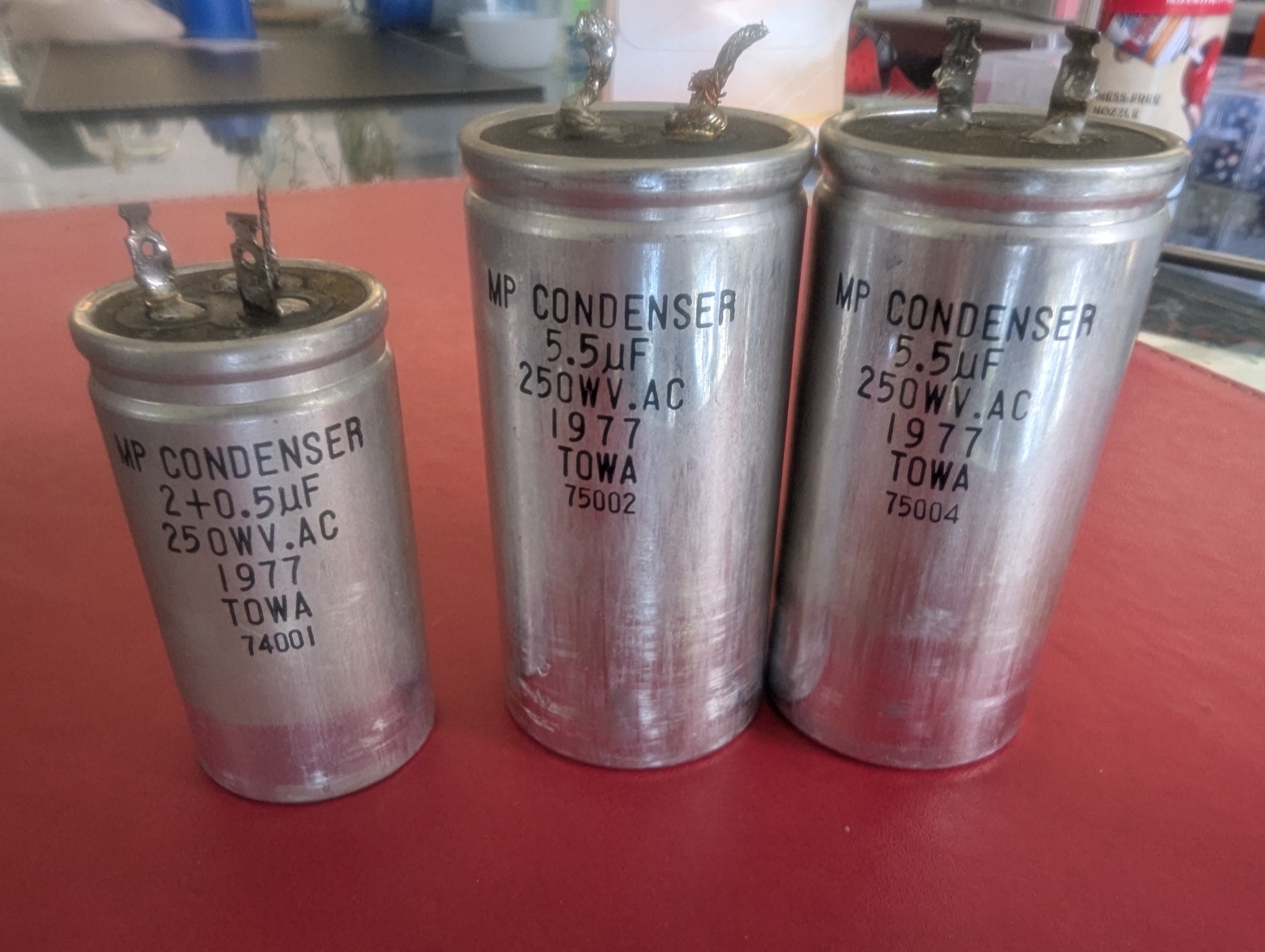 Three AC motor-run capacitors from the MX-5050: TOWA MP condensers, 250 WV.AC, dated 1977 — the 2+0.5 µF capstan cap and the two 5.5 µF reel motor caps, freshly pulled
Out came the original TOWA "MP condenser" cans — dated 1977, rated 250 WV.AC: a 2 + 0.5 µF dual-section for the capstan motor and a pair of 5.5 µF for the reel motors. (What these tell you about identifying a first-gen machine is on Is it a Mini Pro?.)
Why re-cap at all?
The run cap isn't a passive part — it's what gives a single-phase AC motor a rotating field. It feeds the auxiliary winding with current shifted about 90° out of phase from the main winding, and that phase difference is what makes torque. Every failure mode is some version of losing that phase shift:
- Slow drift (the usual one). Old metallized-paper caps lose capacitance over decades, and the rotating field goes from circular to elliptical. You get weak starting torque — a reel motor that hesitates, sluggish wind modes, a take-up side too weak for a clean pack — then vibration and growl, and all the while the motor draws more current and runs hotter to do the same work. That heat quietly ages the winding insulation.
- Open circuit. The auxiliary winding goes dead. From a standstill the motor just sits there humming — and a stalled induction motor is a resistive heater. This machine holds tape tension by keeping the reel motors energized against each other, so they're powered even "idle".
- Dead short. The nasty one, and old oil/paper cans are prone to it: the auxiliary winding ends up straight across the mains and can burn out in minutes.
The maths is simple: the caps are the sacrificial wear item and cost a few dollars; a first-gen reel motor is irreplaceable. On the capstan it shows up as sound before smoke — the hysteresis-synchronous motor either holds its lock on the mains frequency or it doesn't, and a tired cap eats the torque margin that keeps it locked under load. That's wow and flutter on the machine that will play my dad's tapes.
Health checks if you're not re-capping yet: measure the cap (paper caps only drift down — more than ~10 % under the label, replace it), look for bulging or oil weep, and treat a motor that hums before starting or runs hot at idle as a cap suspect first. And dispose of the old cans properly — 1977 oil-filled caps are from the era when PCBs were still used as impregnants, so they go to e-waste, not the bin.
The 5.5 µF problem
I had a hard time finding a 5.5 µF motor-run cap in a single can — it's simply not a value anyone stocks today. The way out is one worth knowing: capacitors wired in parallel add their values. So each reel motor got a 3 µF EPCOS B32355C4305 and a 2.5 µF EPCOS B32355C4255 side by side: 3 + 2.5 = 5.5 µF. I already had a spare 2.5 on hand from the order for my capstan motor — running at 50 Hz, the capstan wants the full 2 + 0.5 µF, so a single 2.5 µF can does that job with two legs.
If you're chasing an odd value for your own machine, paralleling two standard values beats settling for "close enough" — a motor-run cap sets the phase shift on the auxiliary winding, and the motor was designed around the value on the label.
What 49 years buys you
Reading the spec sheet of the new cans against the 1977 originals is a little tour of progress:
- Metallized polypropylene (MKP), dry construction. The old "MP" cans are metallized paper. The modern dielectric is polypropylene film in a flame-retardant can filled with dry resin — no oil, nothing to leak.
- Self-healing. A breakdown in the film vaporises the metallization around the fault and the cap keeps working, instead of failing short.
- Safety class S3 to EN 60252-1 — the highest class in the standard, meaning protection against both fire and explosion at end of life.
- 400 VAC rating against the originals' 250. As I learned on the X-150D: the voltage rating is a maximum, not a set value, so the extra headroom is free reliability.
- +100 °C operating class and a ±5 % tolerance — tighter than anything 1977 shipped in a motor-run can.
Fitting the new cans
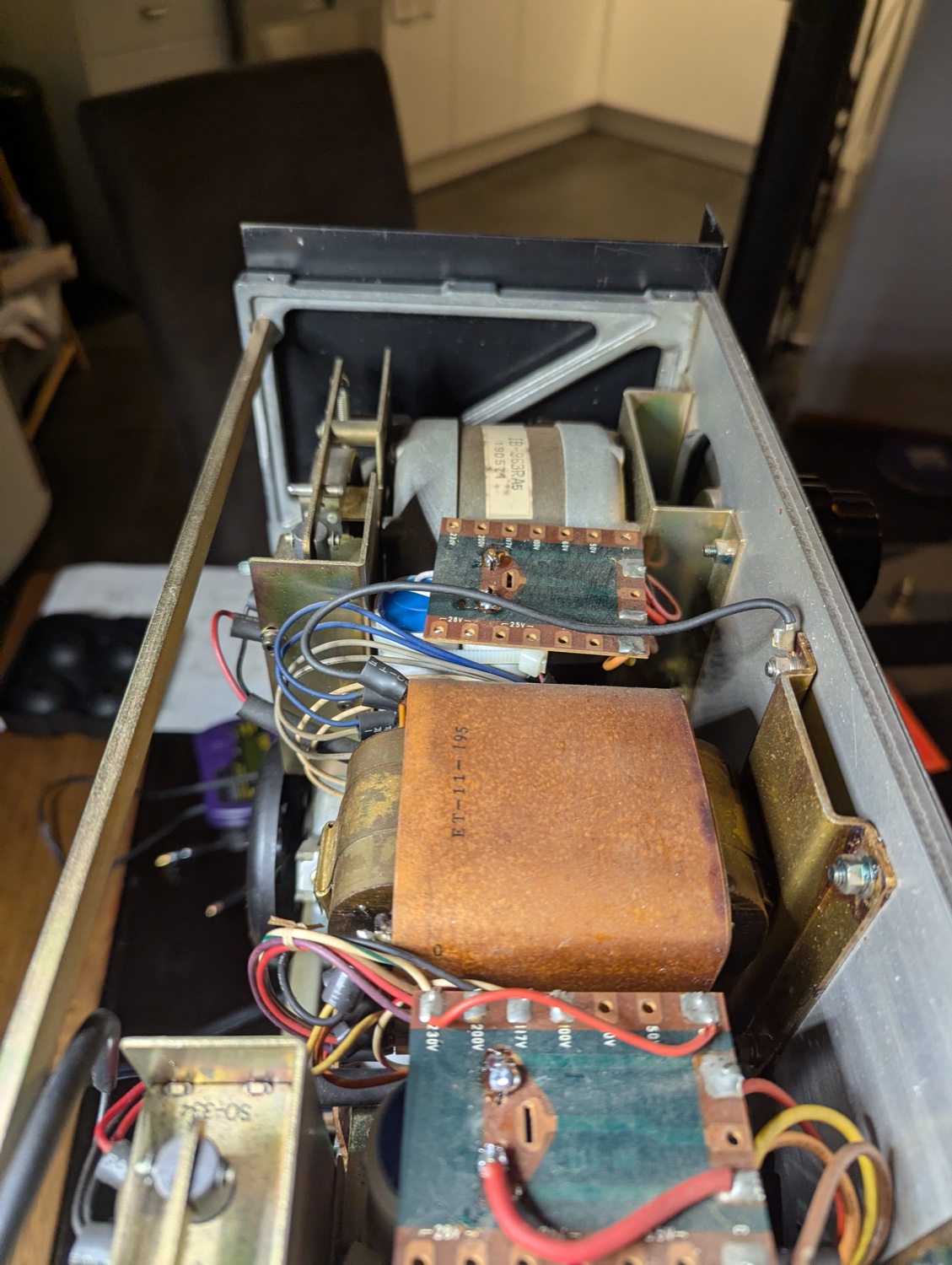 The electronics bay with the new cans in: the two spindle motors, voltage-selector boards re-soldered, and the power transformer in the middle
The install itself was almost a non-event. The modern MKP cans are slimmer than the 1977 TOWA originals, so the original clamp brackets had nothing to grip — but the metal is soft enough that bending the brackets in a little closed them down onto the smaller cans. No new hardware, no drilling; the caps sit where the factory put them.
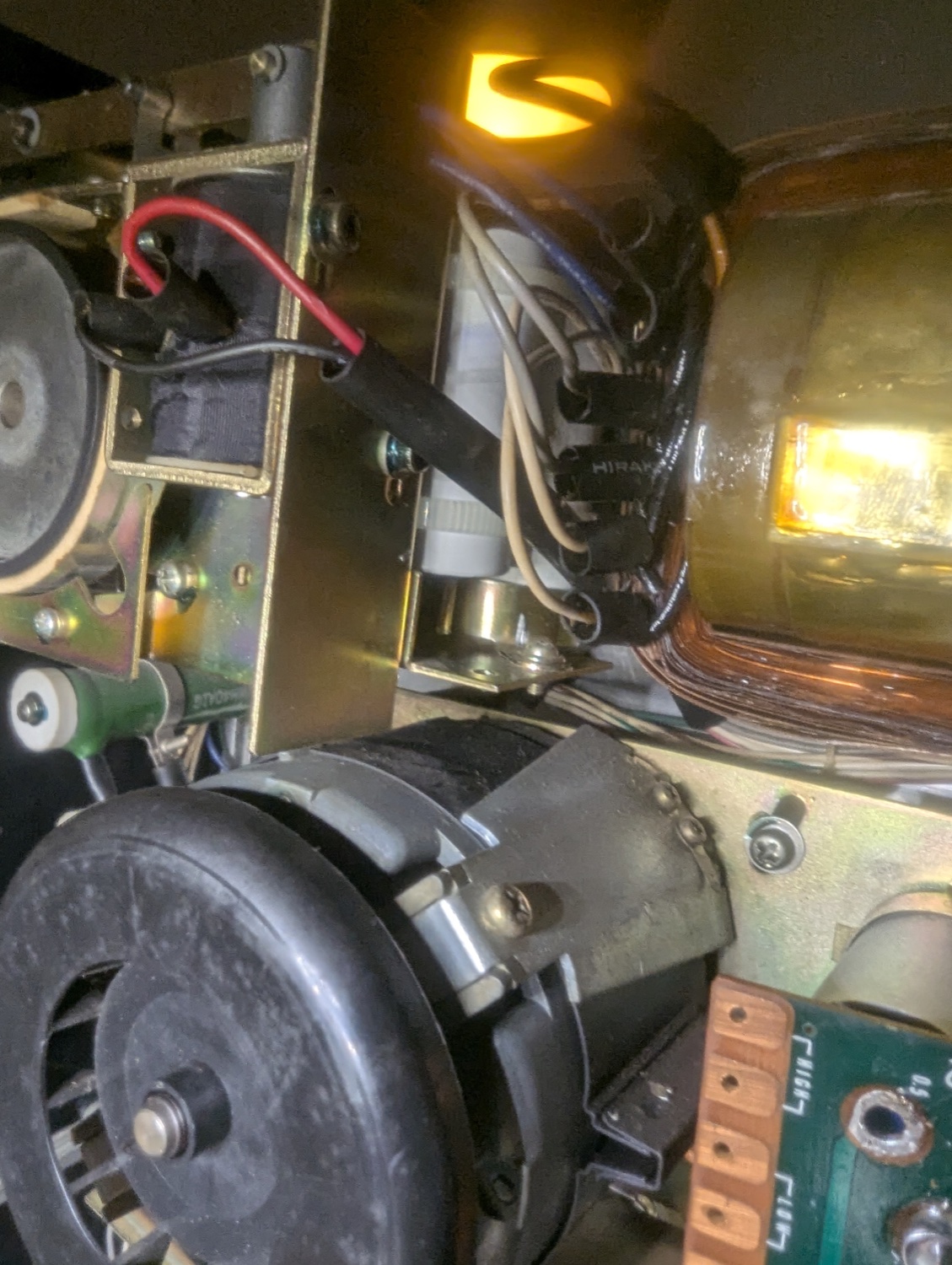 New motor-run cans seated in the original clamp bracket between the reel motor and the power transformer, every joint sleeved
The parallel trick does mean each spindle motor needs two cans where one used to sit. The bracket holds one; the second is simply zip-tied to the first. Not elegant, but secure — and these dry cans have nothing to leak, so mounting attitude doesn't matter.
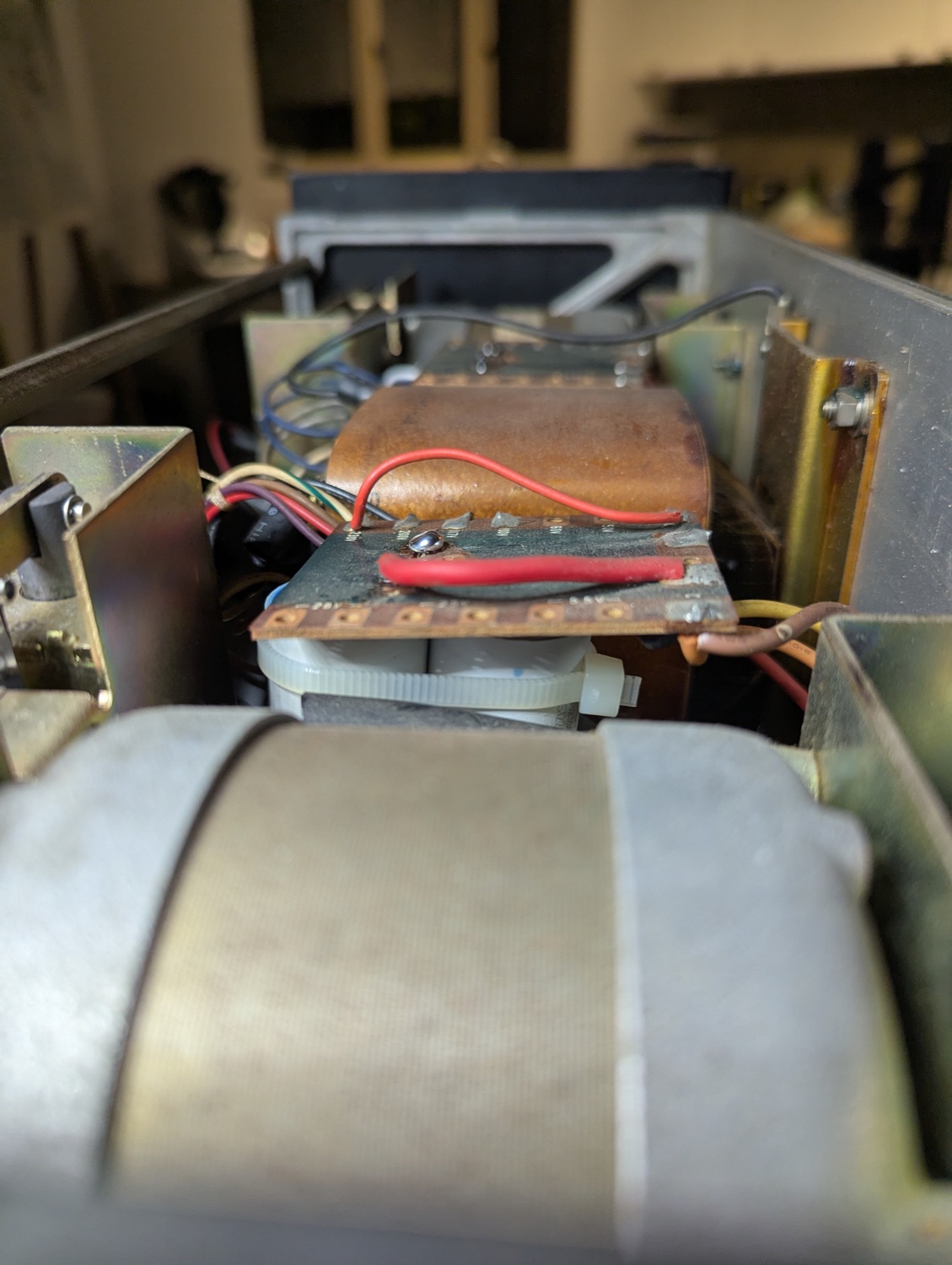 The paralleled pair for a spindle motor — the 3 µF and 2.5 µF cans zip-tied together beneath the voltage-selector board
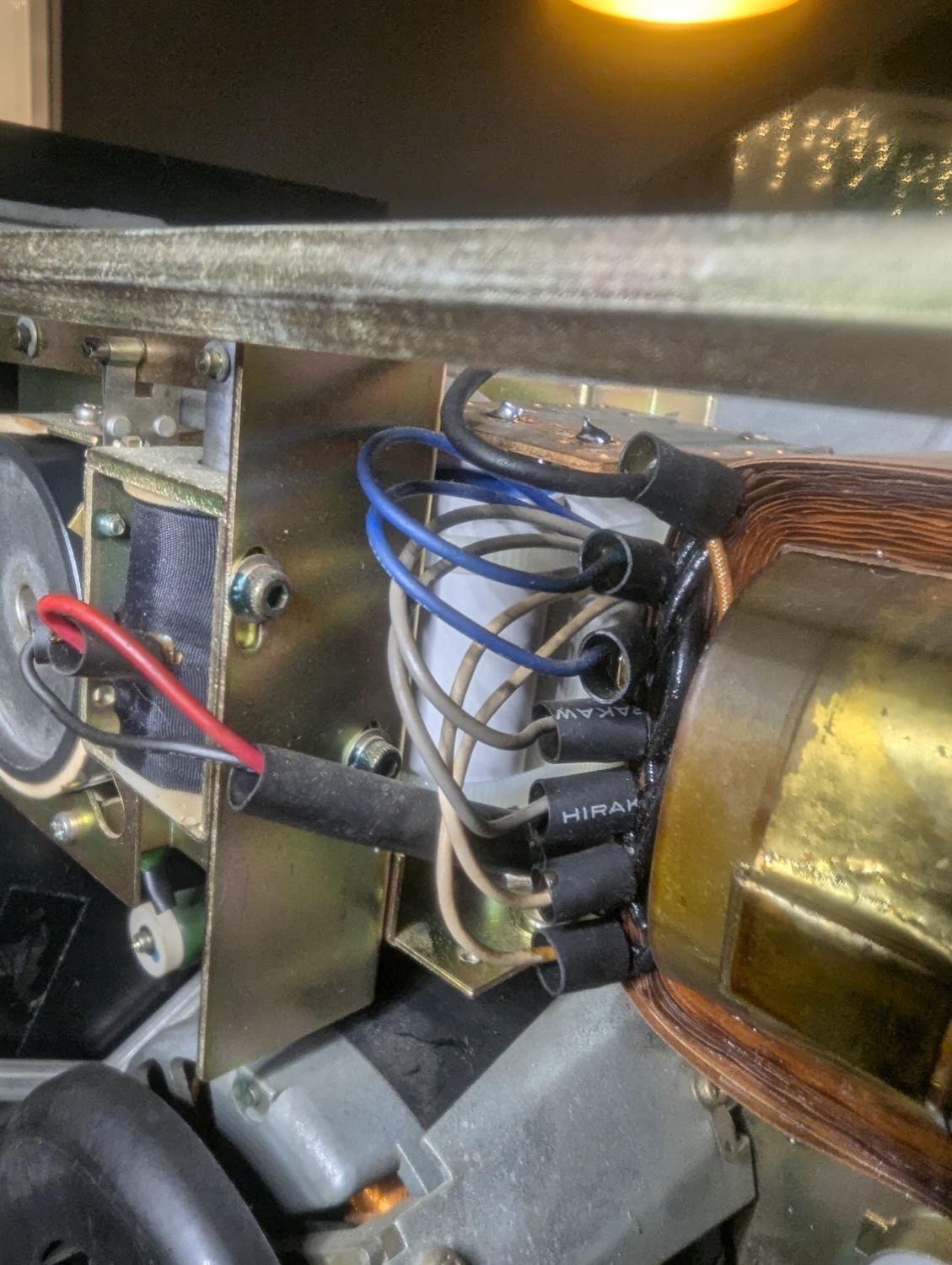 Close-up of the new caps wired in beside the power transformer, the blue and grey leads looping into insulated joints
When even parallel won't save you
The X-150D gave me the opposite problem: it wanted 0.8 µF, and nobody makes motor-run caps below 1 µF at all. There the answer was to drop down to ordinary film capacitors rated at high voltage and let them do the job. Between the two machines, that covers both ends of the hunt: too odd a value — parallel up to it; too small a value — high-voltage film caps.